Retired Phones as a Compute Platform: The Hard Part Was Never Compute
Google is backing a UC San Diego plan to build a low-carbon cluster from 2,000 retired Pixels. Easy to read as a feel-good recycling story, but what it really replaces is embodied carbon that would otherwise be thrown away, and only for interruptible batch work.
Summary
This is easy to tell as a feel-good story: don’t toss the old phone, stack a pile of them into a server, save money and the planet at once. The warm framing buries the real point. The “phone cluster computing” that Google is backing at UC San Diego matters because it goes after the hardest slice of computing’s carbon footprint, and in doing so it exposes where the real bottleneck on this path actually sits. Recycling is the least interesting part of it.
Computing’s carbon footprint has two sources. Operational carbon comes from the electricity a device burns, and you can push it down with better efficiency and cleaner power. Embodied carbon is the emissions already spent manufacturing the hardware; once the machine exists, that number is fixed and no later optimization erases it. A phone’s compute is a heavily optimized, low-power piece of silicon, and its embodied carbon was paid the day it left the factory. So what this project actually attacks is the embodied-carbon ledger: rather than send a still-capable motherboard to the smelter and build fresh servers, keep it computing.
The judgment for builders and researchers is one line. This kind of compute is only realistic for latency-tolerant, interruptible batch work, and what it replaces is not a GPU cluster but the embodied carbon that would otherwise be discarded.
What happened
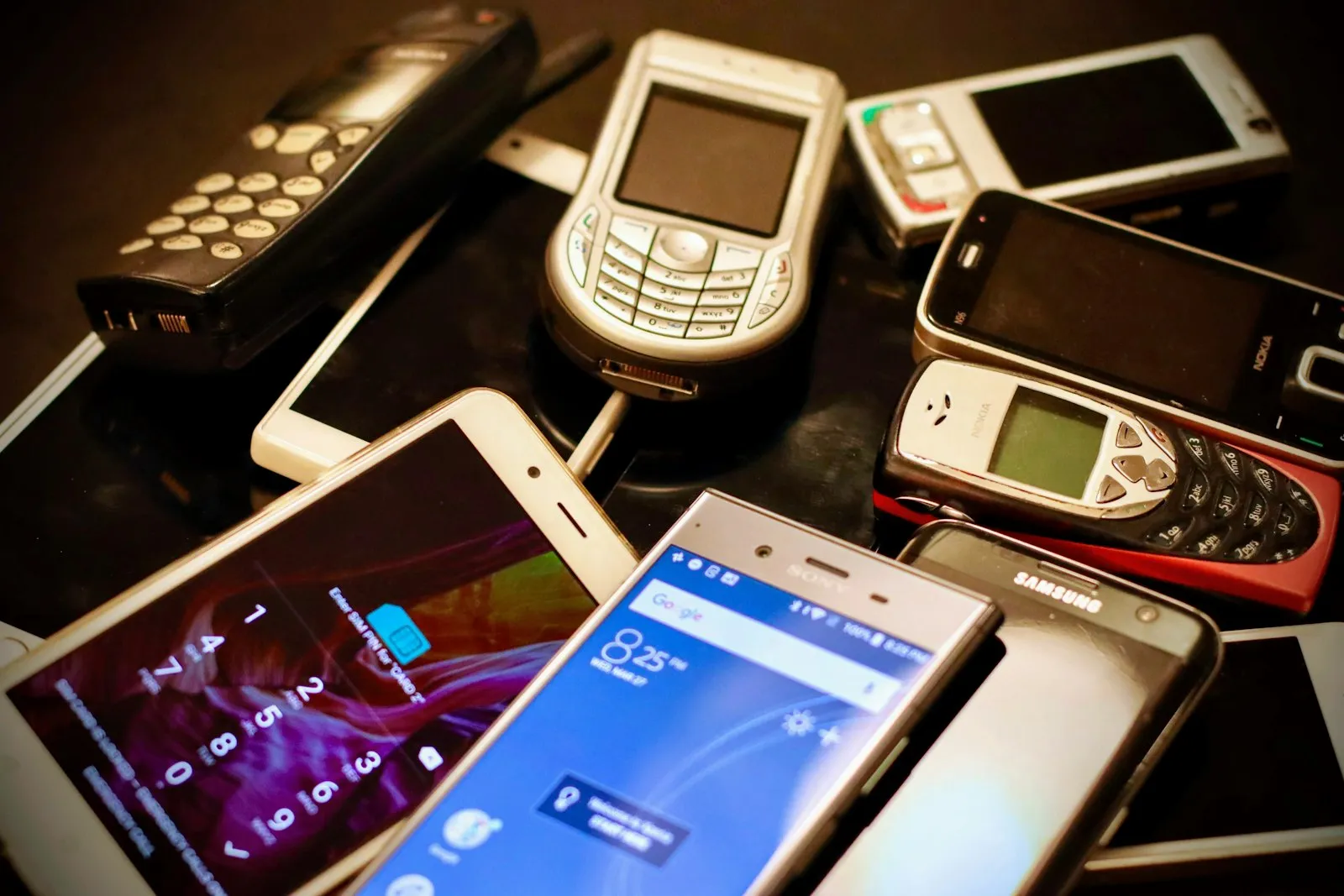
With Google’s support, UC San Diego plans to deploy a datacenter built from 2,000 retired Pixel phones, giving hundreds of researchers and students low-cost, low-carbon cloud computing while avoiding a batch of newly manufactured hardware and its emissions. The full system is expected to launch in Fall 2026.
The method is to strip each retired phone down to its motherboard. The parts a server context does not need, the display, battery, chassis, and peripherals like cameras, either waste space or, like batteries, contain materials not rated for a datacenter environment, so all of it comes off. What remains is the motherboard, where the core compute lives, and the source gives a key number: by Google’s internal carbon footprinting, the motherboard accounts for roughly half of a device’s embodied carbon. The teardown therefore targets the single largest chunk of that embodied carbon.
On software, Android is already built on Linux, but the mobile-oriented userspace gets swapped for a general-purpose Linux distribution. Changing the OS is not only about running general programs; it also switches off protections that matter on a consumer phone but get in the way in a server. The example in the source is the phone’s “low memory killer” daemon, which throttles memory-hungry apps, useful on a handset and an obstacle in the cloud.
Orchestration is the other gate. A single phone is limited, and SPEC results indicate that 25 to 50 phones equal one modern server, so the work has to spread across many devices. The project manages containerized applications with Kubernetes and organizes the phones into self-managing clusters of 25 to 50 units.
There are concrete numbers on results. Universities already run a pile of cloud workloads, from tiny machines hosting Jupyter notebooks to GPU servers for parallel-computing classes. The vast majority fit on a single phone; a standard grading backend runs on something as small as an AWS t3.micro, which is 2 vCPUs and 1GB of memory. In early experiments, a cluster of just 20 phones held the peak submission rate for a class of more than 75 students, with grading latency below the default AWS backend. A 2,000-phone deployment is estimated to support a hundred such classes at once.
Worth stating plainly: this is a project writeup on Google’s research blog, not a peer-reviewed paper. The 2,000-phone cluster is not live yet, and reliability is one of the open questions the project sets out to test; the source explicitly calls the deployment a testbed for whether consumer-grade hardware holds up under sustained use. So what can be confirmed today is the 20-phone early experiment. The 2,000-phone behavior is still a plan.
Why it matters
It matters because it puts an often-ignored fact on the table: operational carbon has many levers, embodied carbon has almost none. You can move a datacenter to clean power and improve PUE, but the emissions from turning sand into a finished server are locked in at manufacture and stay there whether the box is on or off. The industry talks most about electricity precisely because electricity is movable; embodied carbon is hard to move, so it gets routed around. The value here is that the project does not route around it. It goes straight at how to amortize that fixed cost.
The figure that the motherboard is about half of a device’s embodied carbon is what makes the teardown strategy sound. If all this effort recovered only marginal scraps, it would not be worth doing. But since the largest chunk of embodied carbon is locked in the board, keeping that board in service for a few more years is the highest-return decarbonization move available. This is accounting-driven sustainability, not sustainability for its own sake.
The boundary of that value needs to be just as clear. What this replaces is hardware that would otherwise have been built, not a GPU cluster that is currently burning power. The savings come from building less, not from burning less. Read it as “old phones carrying AI’s compute demand” and the direction is wrong: model training and low-latency inference want large memory, fast interconnect, and constant uptime, which is exactly what a pile of 8-to-12GB, mutually heterogeneous, not-yet-proven phones cannot give. It addresses the small, fragmented workloads of teaching and research, not an AI energy crisis.
One level deeper, the project clarifies where the bottleneck really is. Intuition says old phones are too weak to be useful, but the SPEC data flips that: a phone performance core’s single-threaded score already matches or beats a datacenter server. What is weak is not the core but the scale; one phone has little memory and few cores. So the real engineering problem shifts from “can it compute” to “how do you turn hundreds or thousands of unreliable, heterogeneous, batch-collected devices into a schedulable, trustworthy whole.” Kubernetes, self-managing clusters, switching off the low memory killer, all of it is solving coordination and operations, not compute.
Builder impact
If you are sourcing cheap compute for latency-tolerant work that splits into pieces and tolerates interruption, this path is worth a serious look. Assignment grading, notebook hosting, teaching clusters, batch jobs that can survive a node dying at any moment, all fit its appetite. The test is direct: can the task fit inside one phone’s 8-to-12GB box, and if a node dies can it just rerun without consequence. If yes, the economics work. If no, don’t force it.
Conversely, anything that needs low-latency online response, large resident memory, or tight high-bandwidth coupling between nodes should stay off this platform. It is not a cheap stand-in for a GPU cluster; forcing the fit just slams coordination cost into the ceiling. Position it as “a cheap pool of compute that eats interruptible batch work,” not “a budget version of general compute,” and you avoid the trap.
There is one more thing builders should fold into hardware decisions: account for embodied and operational carbon separately. Many teams treat decarbonization as saving electricity, so they fixate on efficiency and power price. But if a meaningful share of your compute can run on second-hand or retired hardware, the embodied carbon saved by “building one fewer machine” often beats “this machine saving a little power,” especially on hardware where manufacturing dominates emissions. What this project offers is a way of doing the math, well short of a turnkey solution. First ask whether the workload truly needs new hardware, then ask whether to save power.
For anyone looking to replicate the idea, the long tail to plan for early is collection and operations. Teardown, cleaning, reflashing, cluster assembly, then the steady reality of devices failing over time, how to hot-swap them, how to keep one or two dead handsets from dragging down a group, these operating costs are not detailed in the source, and they are exactly what decides whether this scales. Whether 2,000 phones run stably, whether consumer-grade hardware survives sustained use, is still an open question the project itself is set up to verify, which means a replicator should price it in from the start.
What to ignore
Ignore any framing of this as an answer to “AI’s energy crisis.” The scale does not match and neither does the workload type. This is a low-carbon option for teaching and research compute, not a cure for datacenter expansion and not a route for model training. When someone holds it up as a flagship answer for AI sustainability, discount it.
Also ignore the dismissive take that “old phone compute is too weak, fit only for chores.” The benchmark data in the source is plain: a phone performance core is not weak per core; what is limited is single-device scale. Misreading the limit as a lack of compute leads to a wrong call on where it actually applies, and it misses the problem it genuinely solves.
As for the 2,000 phones and the hundred classes, remember those are plans, not results. What is worth tracking is the reliability data after the Fall 2026 launch: the real failure rate of consumer hardware running at scale over time is the line that decides whether this approach moves from one school’s experiment toward wider use.
FAQ
What workloads suit a retired phone cluster, and what does not?
It suits latency-tolerant, interruptible work that can be split into small pieces: assignment grading backends, hosting Jupyter notebooks, parallel-computing class labs. In the source, 20 phones already absorbed peak submissions for a 75-plus student class. It does not suit low-latency online inference, large-model serving that needs big memory, or any single-node task that exceeds 8 to 12GB of RAM. Reading it as a GPU substitute is a mistake.
Is the real bottleneck of a retired phone platform actually compute?
No. The single-threaded score of a modern phone's performance core already matches or beats a datacenter server on SPEC, and its embodied carbon is already paid. The hard part is turning a mass of heterogeneous, unreliable, geographically scattered or batch-collected devices into a schedulable, trustworthy cluster. Orchestration, reliability and operations decide whether it is useful. The project handles this with containerized apps under Kubernetes, organized into self-managing groups of 25 to 50 phones.
Is this real decarbonization or marketing?
There is something real. A phone's motherboard accounts for about half of the device's embodied carbon, so giving that board a second life directly avoids the emissions of manufacturing new hardware. That is a genuine embodied-carbon win. But it does not solve AI's energy problem; neither the scale nor the workload type fits. Framing it as an answer to AI energy demand is overreach.